Paris wasn’t new to me, but this trip was different.
I’d been to France several times before. I celebrated one of my birthdays in Paris with lunch at the Eiffel Tower, and the following year I traveled to the South of France and Monaco for another birthday. I already knew how beautiful Paris could be.
This time, though, I wasn’t coming for myself.
My dad had talked about wanting to show my mom Europe, and Paris was especially important to him. This 22-day trip was partly for his birthday and partly a celebration of my parents’ anniversary, and I wanted Paris to feel romantic for them—not just another city we checked off an itinerary.
They arrived in Dublin first, where we spent two days, and Paris was our first destination afterward. I was probably more excited about showing it to them than I had been about going back for myself.
I wanted them to see the Eiffel Tower. I wanted my dad to take my mom to dinner overlooking the Seine. I wanted them to dress up, drink wine, take beautiful photographs and have one of those evenings that actually feels like Paris.
And that’s pretty much what we got.
SEEING PARIS THROUGH MY PARENTS’ EYES
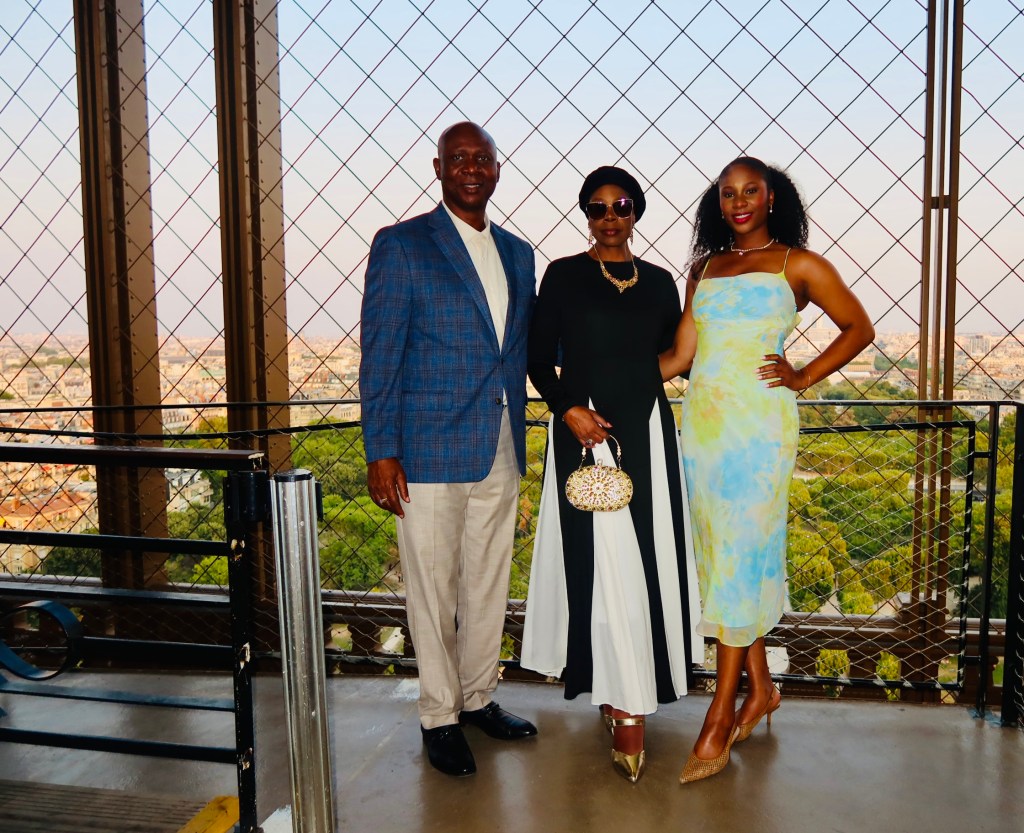
There was something completely different about experiencing Paris through my parents.
I’d already had my own memories here, so I wasn’t trying to make the trip about everything I wanted to see. I was watching them experience it for the first time.
My dad wanted to take photos everywhere. I loved watching the two of them get dressed up, explore the city, and take everything in. Things that weren’t necessarily new to me felt new again because they were seeing them.
That was probably one of my favorite parts of traveling with my parents in general. You start paying attention to different things. Instead of only asking, What do I want to do? I was thinking about whether my mom could comfortably get around, whether my dad was enjoying himself, whether we needed to rest, and whether the experiences I had planned were actually working for them.
Paris was beautiful, but traveling this way also taught me that planning a trip for your parents—especially when you’re considering age, mobility, and accessibility—is very different from planning one for yourself.
And we learned that pretty quickly at the Louvre.
THE LOUVRE—AND WHAT I WISH I’D KNOWN ABOUT ACCESSIBILITY
Our first major stop in Paris was the Louvre.
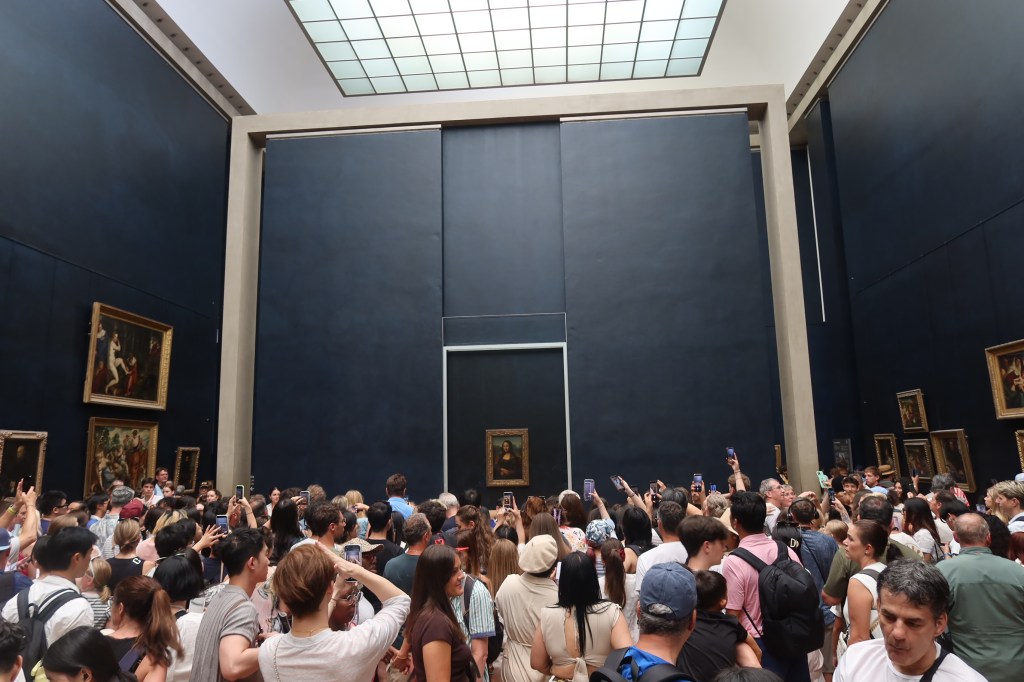
I was excited to take my parents, and of course I wanted to see the Mona Lisa again. We walked through different parts of the museum, saw several of the exhibits, and had a tour guide with us. But the heat was already making the day harder than I expected.
At one point outside the Louvre, my mom fell.
That scared me. Thankfully, we were able to continue, but between the heat, all of the walking, and knowing that we still had our Eiffel Tower dinner that evening, we decided not to spend the entire day at the museum. We saw what we could and then went back to the hotel so everyone could rest, cool down, and get ready for dinner.
Looking back, there is one thing I really wish I had researched before we went: the Louvre’s accessibility options.
I didn’t realize at the time that the Louvre offers free admission to visitors with disabilities and one accompanying person with appropriate documentation. The museum also offers priority access for disabled visitors and their companions, and manual wheelchairs can be borrowed free of charge at the museum.
Because my mom is visually impaired, there were even more resources available that I didn’t know about. The Louvre offers services specifically for visitors with visual impairments, including assistance getting from the information desk to different areas of the museum. They also have a reservation-based service that provides descriptive assistance to help blind and visually impaired visitors experience the museum and its artwork.
I wish I had known all of that before we arrived.
We booked our Louvre experience through GetYourGuide because I wanted the convenience of having a guide take us around the museum. Altogether, I think we spent around $300. There was nothing inherently wrong with booking that way, but knowing what I know now, I would have gone to the Louvre’s official website first, researched the accessibility accommodations available to my mom, and contacted the museum directly if I had any questions.
We could have potentially saved money, but more importantly, I could have planned the experience around what my mom actually needed.
That’s probably one of the biggest lessons I took from traveling through Europe with my parents: if you’re traveling with someone who has a disability or limited mobility, research accessibility before you purchase anything.
Don’t wait until you arrive.
Check whether wheelchairs are available. Look for accessible entrances and elevators. Find out whether the person with a disability and their companion qualify for complimentary admission. If someone is visually impaired, check whether the attraction offers specialized services for them. And if the information online isn’t clear, contact the attraction directly.
By the time we reached some of the later cities on our trip, I had gotten much better at doing this.
I just wish I had known to do it in Paris.
Accessibility policies can change, so I recommend checking the Louvre’s official accessibility information before your visit.
DINNER INSIDE THE EIFFEL TOWER
The part of Paris I was most excited to share with my parents was the Eiffel Tower.
I’d already experienced dining there for myself. A couple of years earlier, I celebrated my birthday in Paris and had lunch inside the Eiffel Tower. I remembered looking out over the city and thinking it was such a beautiful experience, and when my dad talked about wanting to take my mom to Paris for their anniversary, I immediately thought: They need to do this.
So I planned dinner at Madame Brasserie.
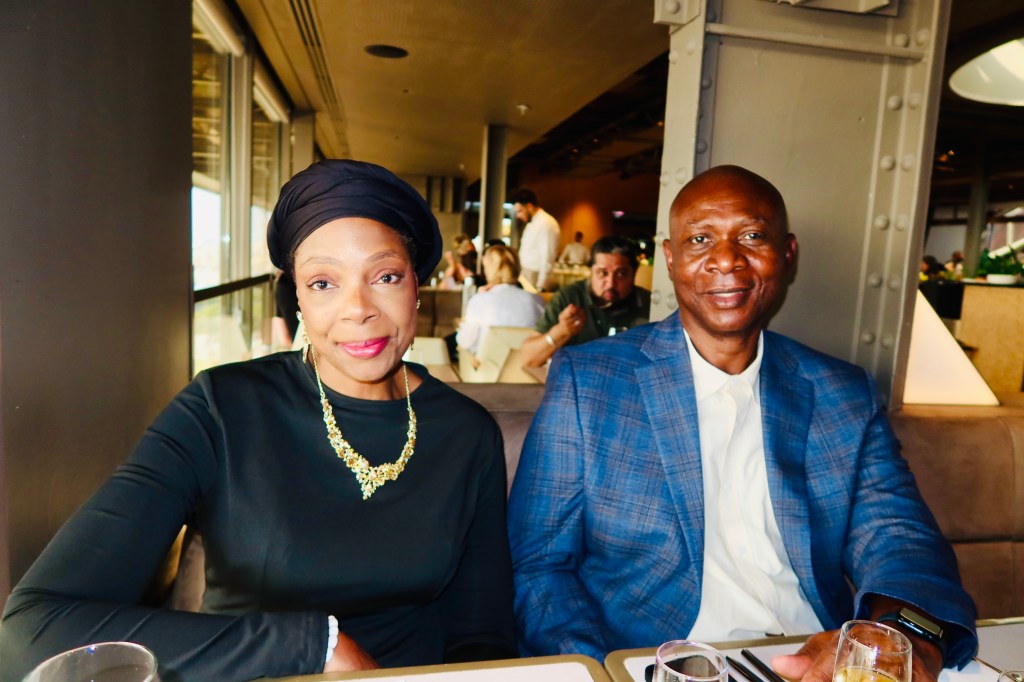
That evening, my parents got dressed up, and they looked beautiful. Regal, honestly. I loved seeing them dressed for dinner together because this wasn’t just another reservation on our itinerary. I wanted it to feel like an anniversary date for them.
We took an Uber as close to the Eiffel Tower entrance as we could and walked the remaining distance. It was still extremely hot, but once we made our way through the entrance and up the tower, we were seated beside a window overlooking Paris and the Seine.
That was the moment I had been waiting for.
We ordered the course menu with wine pairings and spent the evening trying the different dishes together. Some of the food was unfamiliar to my parents, which made it even more fun watching them experience everything.
We also had photographs taken during dinner and chose a few to have printed there. I love that we have those now—not just photos sitting somewhere on a phone, but actual photographs from their anniversary dinner in Paris.
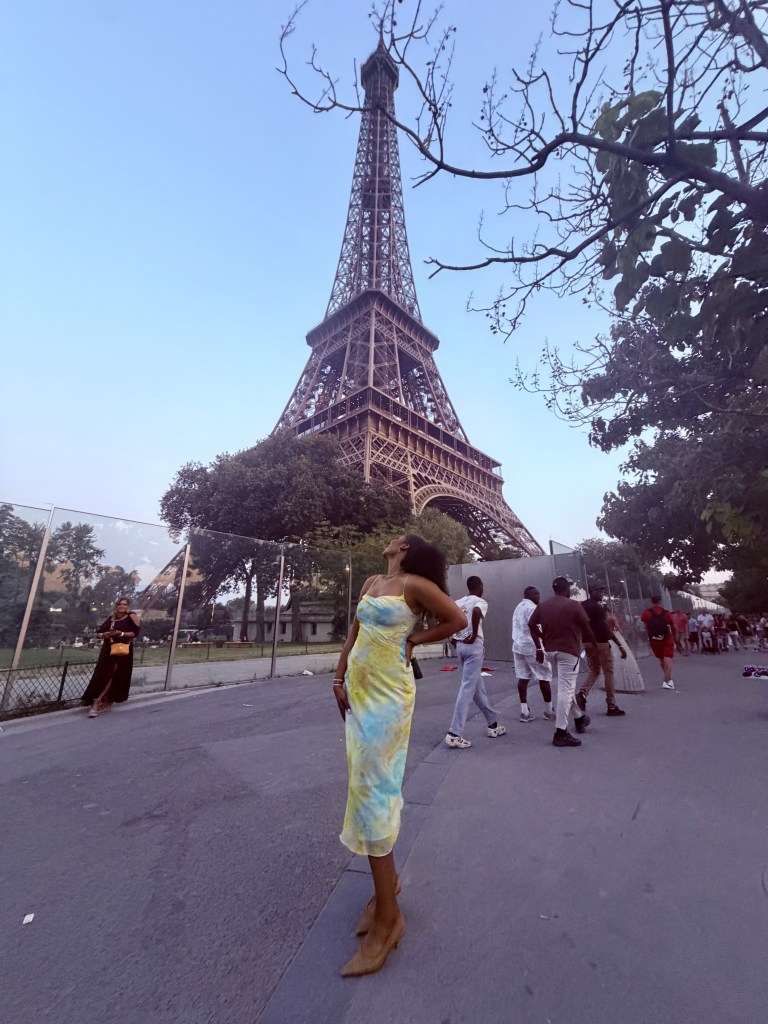
After dinner, we went outside and took more pictures around the Eiffel Tower. Paris was beautiful that night, my parents were happy, and I remember being really grateful that I got to give them that experience.
I’d been to Paris before. I’d eaten inside the Eiffel Tower before.
But watching my parents experience it together made it feel completely different.
THE DINNER WAS BEAUTIFUL—GETTING THERE WASN’T
The dinner itself was everything I wanted it to be for my parents. Getting to the restaurant, however, was probably the one part of the experience I would change.
There are multiple experiences happening inside the Eiffel Tower, so once you’re through the entrance, there are security checks, different lines, viewing areas, shops, restaurants, and a lot of people trying to figure out where they’re supposed to go.
For us, that became a little overwhelming.
My mom is visually impaired and uses a cane, and I was also traveling with two older parents during an intense heat wave. I found myself paying attention to things I probably wouldn’t have thought twice about if I had been there alone: how crowded the elevator was, whether my mom had enough room around her, whether someone might bump into her, and whether my parents understood where we were going next.
The signage could have been clearer and larger, especially for someone with a visual impairment. There were people who would point us in the right direction, but I would have appreciated someone actually guiding us through the different stages of getting to the restaurant.
Eventually, we were put into a large elevator with quite a few other visitors. It felt more like being moved with the general sightseeing crowd than arriving for a special dinner reservation.
Thankfully, one of the attendants noticed my mom’s cane and made sure she had enough space in the elevator. I really appreciated that.
I think my expectations were also influenced by my previous experience dining inside the Eiffel Tower. When I came for my birthday lunch, the arrival felt smaller and more personally guided. This time, there were simply more people and more moving parts.
None of that ruined the evening. Once we were seated at Madame Brasserie, the experience was lovely.
But if I were bringing my parents again, I would contact the restaurant or Eiffel Tower ahead of time and ask specifically about the best entrance and arrival process for a guest with a visual impairment or limited mobility.
Sometimes accessibility isn’t simply about whether an elevator exists.
It’s about how easily someone can get from the entrance to where they’re actually trying to go.
WHAT I’D DO DIFFERENTLY NEXT TIME
One thing I wish we’d been able to do was take a boat ride along the Seine.
My mom wanted to experience it, but after falling outside the Louvre, she really needed to rest and elevate her knee. Continuing to push her through another activity just because it was on the itinerary wouldn’t have been worth it.
My dad, on the other hand, does not like being on the water, so convincing him to join us probably wasn’t going to happen anyway.
If we went back, I actually think I’d split us up for a little while.
I’d take my mom on the Seine cruise and let her experience Paris from the water. My dad could find a restaurant or café along the river, order a coffee, relax, and enjoy Paris firmly from dry land.
Then we’d meet him afterward.
That’s another thing this trip taught me about traveling with family: everyone doesn’t have to do everything together.
Sometimes the better itinerary is one that gives each person the experience they’ll actually enjoy.
WOULD I GO BACK TO PARIS?
Absolutely. Paris is one of those places I don’t feel finished with.
I’ve experienced it in different ways now—celebrating my own birthday, traveling through France for another birthday trip, and finally returning with my parents. Each visit has given me a different memory of the city.
But this trip will probably always stand out.
I got to watch my dad take photos of everything. I got to see my parents dressed beautifully for their anniversary dinner inside the Eiffel Tower. We sat beside the window overlooking the Seine, drank wine, tried new food, and left with printed photographs from the evening.
Not everything went perfectly. My mom fell outside the Louvre. The heat made everything more exhausting. There were accessibility accommodations I wish I had known about before we arrived, and there were experiences—like taking my mom on a boat ride along the Seine—that we simply didn’t get to have.
But I don’t think a trip has to go perfectly to be beautiful.
If anything, this trip taught me to plan differently. Next time, I would research accessibility before buying tickets. I’d contact hotels and attractions ahead of time when necessary. I’d build in more rest. I’d let my mom and me take our Seine cruise while my dad happily waits for us on dry land.
And I’d remind myself that when you’re traveling with people you love, the goal isn’t to get everyone through every item on an itinerary.
It’s to make sure everyone gets to experience something they’ll remember.
Paris gave my parents that.
And getting to watch them experience it gave it to me too.
IF YOU’RE PLANNING PARIS WITH OLDER PARENTS
Research accessibility before buying tickets.
This is probably the biggest thing I would change. Go directly to the attraction’s official website first and look specifically for its accessibility information. Some attractions may offer wheelchairs, accessible entrances, priority access, or complimentary admission for a disabled visitor and a companion.
Don’t assume everyone needs to do everything together.
My mom wanted to take a boat ride on the Seine. My dad doesn’t like being on the water. Next time, I’d take my mom on the cruise while my dad enjoyed a coffee at a café along the river. Everyone can have a good day without having the exact same day.
Build rest into the itinerary.
After my mom fell outside the Louvre, what she needed wasn’t another attraction—she needed to go back, rest, and elevate her knee. I wouldn’t pack every hour of the day next time.
Be especially careful with summer heat.
We traveled during an intense heat wave, and it made sightseeing much harder on my parents. Water, portable fans, air conditioning, breaks, and avoiding unnecessary time outside became much more important than they would have been on a cooler trip.
Contact places ahead of time when accessibility matters.
A website saying that an elevator exists doesn’t necessarily tell you what the actual experience will be like. If I have a specific concern about my mom getting around, I’d contact the hotel, restaurant, museum, or attraction before we arrive.
For the Louvre, start with the official website.
The Louvre currently provides accessibility accommodations including free admission for a disabled visitor and one companion with appropriate documentation, priority access, and free wheelchair loans. It also provides services specifically for visually impaired visitors. Policies can change, so check the Louvre’s official accessibility information when planning your visit.
For an Eiffel Tower dinner, ask about the arrival process.
Madame Brasserie itself was beautiful, and I’d absolutely consider taking my parents again. But next time, I’d ask in advance about the easiest entrance and route to the restaurant for someone with a visual impairment or limited mobility.
 ALEXIA EMUZE | TRAVEL | JOURNAL | WATCH | ABOUT